Author Archives: Peerless Precision

  1. The Value of Research & Development in Precision Machining

    Comments Off on The Value of Research & Development in Precision Machining

    Making a part for the first time is always exciting. Anytime our team has the opportunity to create something original, step outside our comfort zone, and build new skills, we’re up for the challenge!

    But diving into a new project doesn’t mean going in unprepared. To ensure that every customer order results in top-quality parts, we perform intensive research and development to help us gather as much information as possible before machining even begins.

    Our Research and Development Process

    There’s a reason customers come to Peerless Precision for new and complex parts, and it’s not just because we excel at holding extremely tight tolerances. We’re also committed to figuring out the intricacies of every part we make. Our thorough R&D process goes from conception to completion:

    Programming

    The true success of a CNC machining program relies heavily on the preparation completed beforehand. This preparation involves defining operations, sequencing machining orders, and performing all the necessary calculations to make sure parts are machined correctly.

    At Peerless Precision, we don’t stop until the CNC programming is right—because when the programming is off, the project is doomed to fail.

    Material Selection

    Whether your part requires aluminum, stainless steel, titanium, or something more exotic, we’re committed to doing all the necessary research to tackle the job. From studying material properties to experimenting with different feeds, speeds, and tooling, we learn everything we can about any new material we’ll be working with.

    Precision Machining
    Research and Development

    The smaller and more complex the part, the more internal research and development is necessary for precision machining. Customers looking for aerospace machining services often come to us for mixed assemblies, which require the utmost precision.

    For example, we’re uniquely equipped to machine piston and sleeve assemblies and valve and sleeve assemblies to the tight diametrical clearances required for fuel injection systems in airplanes and helicopters. The stakes are high for these projects because if the tolerances are off by just one millionth of an inch, the engine could fail.

    But thanks to our thorough research and development process, we’re prepared to machine these assemblies to spec with scrupulous precision.

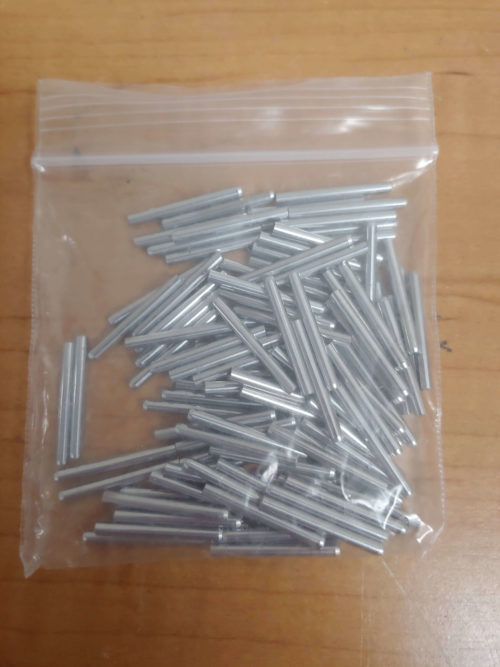
    Take our longtime customer, who had an issue with the pin and sleeve matched sets that they were receiving from another supplier. None of the pins and sleeves had the match fit that the customer had called out on their specifications, so the engineer was stuck sanding them down at their desk to make them fit.

    When the engineer was referred to Peerless, we asked them to send us the pin and sleeve sets that were not matching: not only did we bring them to spec through honing and match lapping, we ensured that all the pin and sleeve sets were interchangeable.

    Additionally, we offered to make 10 interchangeable sample sets from scratch. If the parts worked for the customer, only then would we bill them for the parts. We were willing to take the risk because we knew we could deliver exactly what the customer wanted—no additional sanding required. Thanks to our diligent R&D process and precision machining capabilities, all 10 sets matched perfectly and were within tolerance range. Now if something happens to either component, the customer can easily pull a replacement from stock, confident that the pin will fit the sleeve and vice versa.

    Inspection

    Once we have a clear idea of how to machine your part, we then build it out for confirmation. Our top-of-the-line machines and inspection equipment ensure we’re holding tolerances to spec and meeting all quality requirements. We’re also AS9100D and ISO 9001:2015 certified, so you can be certain that we’re in compliance with the most exacting industry standards.

    Testing

    Research and development starts before machining begins and continues until after it’s finished. The final phase of the R&D process is testing to ensure we’re handing over a high quality part that functions flawlessly.

    When proving out a new concept, we make several parts in our Massachusetts machine shop specifically for testing. (Don’t worry, we never charge customers for these extra parts!) We then test the parts for consistency and functionality using our in-house inspection equipment.

    We’re always willing to go the extra mile for customers, no matter what level of testing they require. Take the pin test we developed for the coldfinger weldments we manufacture for another customer. We machined a pin gauge, then worked together with the customer to design a drop test. To pass the test, the pin gauge needed to drop down the sleeve shaft freely, without touching any sides. We perform the pin test before parts leave our shop, and our customer performs the pin test once parts arrive onsite. We check in every 6 months to reevaluate the function of the pin gauge and recalibrate it if necessary.

    Research and development should be a given every time a manufacturer makes a part for the first time. The key is to find a shop that goes above and beyond your expectations to ensure they get it right.

    Trust Peerless Precision to put in the work. Request a quote today to get started.
  2. What It Takes to Excel at Titanium Machining

    Comments Off on What It Takes to Excel at Titanium Machining

    When you need an ultra-strong part with an excellent fatigue life, titanium is a great choice of material.

    This versatile metal has a uniquely high tensile strength to weight ratio: it weighs about half as much as stainless steel but is nearly 30% stronger! In addition to its exceptional strength, titanium is also known for being rust and corrosion-resistant.

    Available in many varieties, titanium can be alloyed with aluminum, manganese, iron, and other metals to further increase its strength, as well as its ability to withstand high temperatures.

    But despite the many benefits of titanium, any job shop will tell you that it’s notoriously difficult to machine. That’s why when you need titanium machined parts, you need a shop you can trust.

    At Peerless Precision, we have the right capabilities, equipment, and personnel to take on the toughest titanium jobs. Today, we’ll explore common titanium applications, plus machining challenges that we’ve managed to overcome with great success.

    Common Titanium Applications

    Titanium Coldfingers

    Due to titanium’s durability, it’s extremely useful for a wide variety of applications. If you’re in any of these industries, your parts could benefit from this material:

    • Medical. Known for its bacteria-resistant properties, titanium is often used in medical machining for applications such as implants, surgical devices, and pacemakers.
    • Aerospace. In high-risk aerospace applications requiring heat resistance and strength, such as airframes and engines, titanium is a trustworthy material that never fails.
    • Automotive. Because titanium can withstand temperatures of over 600 degrees, it’s ideal for hot environments. Internal combustion engine components such as valves, connecting rods, and pistons and sleeves are often made from titanium.
    • Defense. Salt water has virtually no corrosive effect on titanium, making this material a great choice for Navy parts that come into direct contact with the sea, like propeller shafts and underwater manipulators.
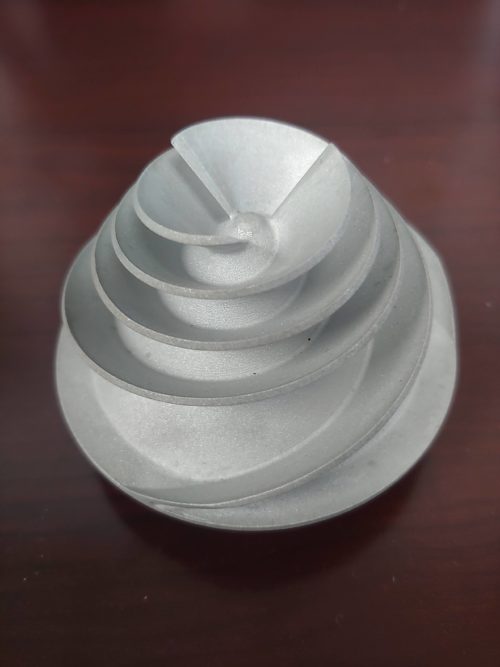
    • Water and energy. Titanium impellers are often used for centrifugal pumps to move fluids away from the center of rotation.
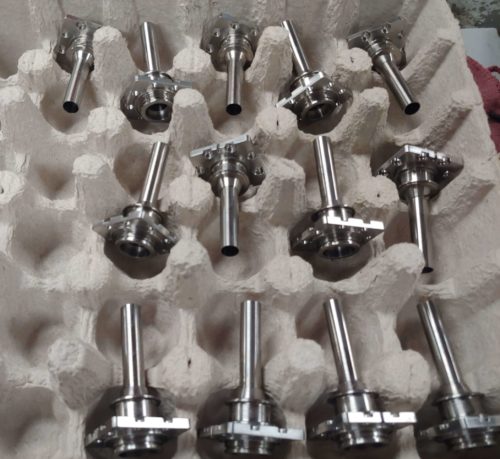
    • Commercial optics. As experts in optical machining, we specialize in making titanium coldfinger weldments used in submicro cryogenic cooling systems for infrared, night vision, and thermal imaging equipment.

    Challenges of Machining Titanium

    Here’s a look at what makes titanium so difficult to machine:

    • Material hardness. While it’s not hard enough to require diamond turning, titanium is significantly harder than stainless steel or aluminum. Machining titanium often results inbroken tools and workpieces if not done carefully.
    • Special tooling requirements. Machining titanium requires coated carbide tooling to maximize cutting strength while minimizing friction that can lead to work hardening. We have a dedicated dual-spindle CNC lathe for titanium coldfinger weldments, but we can generally run titanium in any of our machines with the correct tooling.
    • Research and development. When machining a new titanium part, machine shops often need to experiment to get the process right. Many shops will no-quote customers or attempt to machine titanium without putting in that necessary upfront work, but not Peerless Precision. We do what it takes to machine titanium parts to perfection.

    Peerless Precision Excels at Titanium Machining

    Want a quick example of why we’re the go-to shop for titanium machining? Recently, a customer reached out to us in need of a coldfinger weldment. The part included a titanium cone with a wall thickness of .002”. The customer had already been to several shops that turned the job down and one that couldn’t machine the part properly.

    Nevertheless, we were excited to take on the challenge. We offered the customer a non-recurring expense budget for research and development so we could determine how to properly machine the part. By intricately cutting the cone, we verified the right thickness, and now we’re prepared to purchase tooling to try different machining methods until we get it right.

    Our titanium expertise has been years in the making. When we first started machining titanium coldwells, for example, it was common for us to lose 100 parts before getting a good one. But that was 25 years ago. Since perfecting our technique, we haven’t had to scrap a titanium coldwell since.

    When it comes to machining titanium, you need a dedicated shop with a proven track record. Make Peerless Precision your one-stop titanium shop. Request a quote today

  3. 5 Time-Saving Benefits of 5-Axis Machining

    Comments Off on 5 Time-Saving Benefits of 5-Axis Machining


    When you need complex parts made fast, you need a machine shop with advanced technology to deliver precision parts with a quick turnaround.

    But if the job shop you go to uses 3 or 4-axis machines to make intricate parts, you could be stuck dealing with unnecessarily long lead times.

    At Peerless Precision, our 5-axis machining capabilities guarantee high quality and unparalleled efficiency while saving customers time and money.

    5 Axis Machining

    How Does 5-Axis Machining Differ from 3 and 4-Axis Machining?

    In standard 3-axis milling, a cutting tool rotates along the X, Y, and Z axes to remove material from a fixed workpiece. By machining standards, it’s a relatively slow process that’s ideal for machining simple parts.

    4-axis machining is the next step up, adding an additional axis of movement to the cutting tool so that it can rotate around the X axis. Unlike with 3-axis milling, the workpiece itself also rotates, allowing for both milling and turning capabilities.

    Finally, 5-axis machining adds yet another rotational axis, enabling access to the workpiece from any direction with a single setup. This versatile technology is commonly used to machine high-precision parts with complex features.

    5 Time-Saving Benefits of 5-Axis Machining

    5-axis machines offer various benefits that decrease lead time to deliver complex parts faster:

    1. Reduced need for fixturing.

    Since 3-axis machines are unable to rotate parts, special fixturing is required to machine certain features. But on a 5-axis machine, it’s possible to hold a part in one position and rotate it to achieve complex geometries.

    5 Axis Machining2. Complex feature capabilities.

    Rotating on an additional axis allows 5-axis machines to maneuver complex geometries and tight angles with greater reach and flexibility.

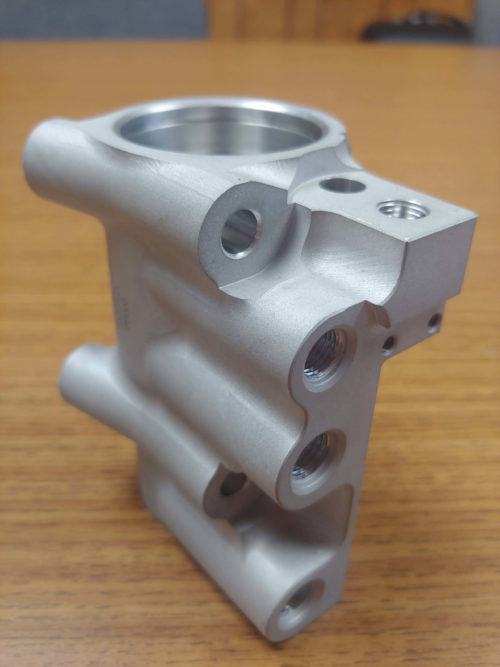
    For example, take a look at this cylinder for an actuator assembly. The contours and bosses on this aluminum part would have taken at least four operations on our 4-axis mill. On a 5-axis machine, we are able to achieve the required features and geometries in only two operations.

    3. Shorter run times.

    5-axis tooling easily reaches all sides of a part, removing material exceptionally fast and cutting slashing cycle times by up to 50%.

    We recently machined parts for thermal imaging and night vision cameras for one of our defense customers. Using 5-axis machining capabilities, we successfully reduced first operation times from 2.5 hours to 1.25 hours and second operation times from 1.25 hours to 20 minutes!

    4. Smoother surface finishes.

    There are 3D milling capabilities built into our 5-axis machines that allow us to achieve extremely smooth surfaces on parts, reducing the need for extensive finishing operations.

    Because the part is much closer to the cutting tool than on a 3 or 4-axis machine, we can use a shorter tool that produces less vibration and produces a smoother surface finish.

    5. Fewer setups.

    Having to manually rotate a part on a 3-axis machine means programming multiple setups to achieve complex features on multiple faces. Not only is this process inefficient, but it also introduces the risk of incorrect alignment each time the part is repositioned.

    On the flip side, 5-axis machining accesses a greater number of part faces simultaneously, minimizing the need for setups.

    The best thing about 5-axis CNC machining services at Peerless Precision is that you’ll never pay more for this advanced technology. Our CNC milling rate is the same across all machines. So if you see 5-axis machining on your quote, don’t panic! You’ll actually end up saving time and money.

    We’re happy to quote your part for you both ways (3 or 4-axis vs. 5-axis) so you can see for yourself the difference that 5-axis machining makes. Request a quote from our MA machine shop today!

  4. The Benefits of Peerless Precision’s In-House Laser Welding Services

    Comments Off on The Benefits of Peerless Precision’s In-House Laser Welding Services

    At Peerless Precision, we take pride in the relationships we build with our customers. We’re always going the extra mile to keep costs low and lead times short.

    Like many other machine shops, it’s not uncommon for us to outsource to trusted vendors for certain services that we don’t have in-house. But we’re constantly looking for opportunities to add to our wide range of capabilities.

    Offering as many services as we can in-house at our Massachusetts machine shop helps us control factors like cost, lead time, and quality to improve customer satisfaction.

    Last year, we invested in a laser welder to accommodate one of our valued customers. It’s just one example of how far we’re willing to go to meet our customers’ needs.

    The Challenge: Customer Was No-Quoted for Laser Welding Services

    One of our customers had been relying on our electron beam welding services to fuse two titanium components together. But they ultimately decided that they wanted the parts laser welded instead.

    Both welding methods produce high-quality parts, but there are some key differences:

    • Electron beam welding sends a stream of high-speed electrons toward two components. The heat produced from the moving electrons fuses the components together. But because electron beams are notoriously hard to control, welders must use a vacuum setup to concentrate theelectrons, then remove gaseous contamination afterward.
    • Laser welding uses a quick-heat laser that beams photons at the components to fuse them. Because the photons are easier to control,laser welding provides greater accuracy than electron beam welding with less setup and cleanup time.

    Laser Welder

    The team at our Massachusetts machine shop was well aware of the advantages of laser welding. But we didn’t have that capability in-house.

    We attempted to source local laser welding companies on behalf of our customer, but all we got back were no-quotes. The customer’s part had thin walls, which increased the risk of shafts collapsing during the welding process. No one wanted to take on such a risky job.

    In an effort to solve the problem, our customer began laser welding the parts themselves. We would ship the customer the components, and they would weld them together, then ship them back to us so we could continue machining.

    Although our customer laser welded the parts successfully, it quickly became clear that the shipping expenses and lead times were untenable.

    We had a better solution: invest in a laser welder to offer our customer a more efficient process.

    The Solution: Peerless Precision Adds In-House Laser Welding Services

    Where other machine shops sent back no-quotes, we took on the risk of buying a new piece of equipment so we could weld these challenging parts. Not onlycould we better serve this one customer, but we could also offer laser welding services to many others.

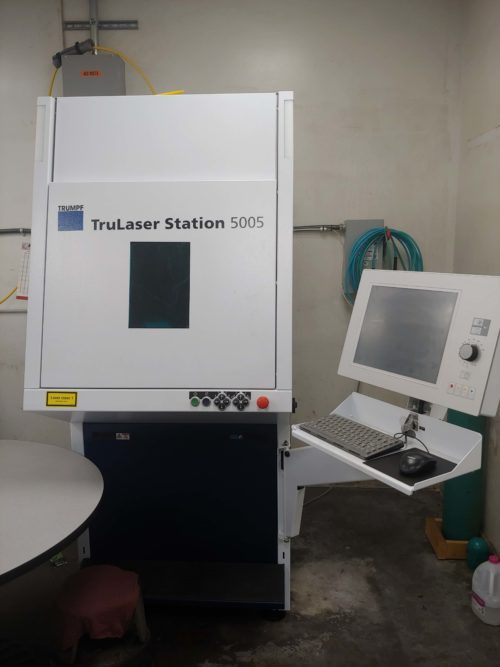
    After doing our due diligence, we purchased the Trumpf TruLaser Station 5005, a tool that would allow us to weld thin, strong materials at lightning speeds.

    Before offering our new laser welding services, our foreman underwent a rigorous training program with Trumpf to learn how to use the equipment. We’re a training company by nature, so teaching and learning new skills is baked into our culture. Still, Trumpf was by our side every step of the way to answer questions and set us up for success.

    With our new laser welder in place, we began completing the entire manufacturing process for our customer in-house, saving them significant time and money.

    Want to work with a machine shop that will go the extra mile for you? Request a quote today.

  5. What it Takes to Machine Mechanical Components for Medical Applications

    Comments Off on What it Takes to Machine Mechanical Components for Medical Applications


    When you need mechanical components for the medical industry, it’s critical to find a machine shop you can trust. There’s no compromising on quality for parts that may be used to support, sustain, or even save people’s lives.

    You need to be confident in a shop’s abilities to source high-quality materials, machine parts precisely to specification, and follow rigorous quality control procedures.

    Not all shops live up to those standards. . . but Peerless Precision does.

    Machining Mechanical Components for Medical Applications

    Mechanical Components

    We’re an ISO 9001:2015 certified machine shop with trusted processes in place to maintain the highest standard of quality for our customers. Here’s why we excel at machining mechanical components for medical applications:

    High-quality materials

    We source and buy materials from rigorously vetted vendors that follow ISO 9001:2015 and AS9100D standards. All materials are DFARS compliant—even when it’s not required for an application.

    These are the materials we most often help source for manufacturing medical components:

    • Titanium: an extremely strong and corrosion-resistant material found in biomedical implants
    • Stainless steel: a durable and corrosion-resistant material known for being easy to clean and sanitize
    • Invar: a nickel-based non-magnetic alloy resistant to temperature fluctuations, weather patterns, and rust
    • Tungsten: a dense and solid material perfect for radioactive source containers and syringe shields
    • Copper: an antiviral and antibacterial material used on high-touch surfaces
    • Aluminum: a lightweight and strong material used for support equipment like wheelchairs and IV stands

    Tight tolerances

    Medical devices are delicate pieces of equipment that perform vital functions—and they have no room for error. These parts often need exceptionally tight tolerances to function properly. We’re experts at achieving tolerances ranging from .0001”- .000005”, which components for the medical industry often require.

    Our talented team has the craft and experience to achieve tolerances by machine and by hand. So whether we’re relying on our automated CNC machining services or our manual grinding, honing, and lapping capabilities, we’ll shape your part to the exact tolerance required.

    Metal finishing

    Many parts require metal finishing to enhance surface properties such as aesthetics, adhesiveness, electrical conductivity, wear resistance, corrosion resistance, and frictional resistance.

    We use processes like plating, heat treating, and film coating to harden and protect the materials used for medical components.

    We perform some finishing services in-house and outsource others to trusted partners. But no matter what, we manage the entire process so you never have to juggle multiple vendors.

    Quality Control

    Quality is always the top priority at our MA machine shop. It’s especially important when you’re manufacturing medical components. We don’t just maintain an ISO compliant quality system and document all processes. We also machine our parts in an environmentally controlled facility.

    This type of environment mimics the environment where our customers inspect and use their parts. All medical components leave our shop rust-free, with no risk of material expansion or retraction. Customers can be confident they’re receiving parts exactly as specified, without any variation from part to part.

    Do you need a mechanical component for a medical application? Trust the experts at Peerless Precision to manufacture it to perfection. Request a quote today!